The Fastest Way to Tell the Difference
In many homes, these two clues narrow it down quickly:
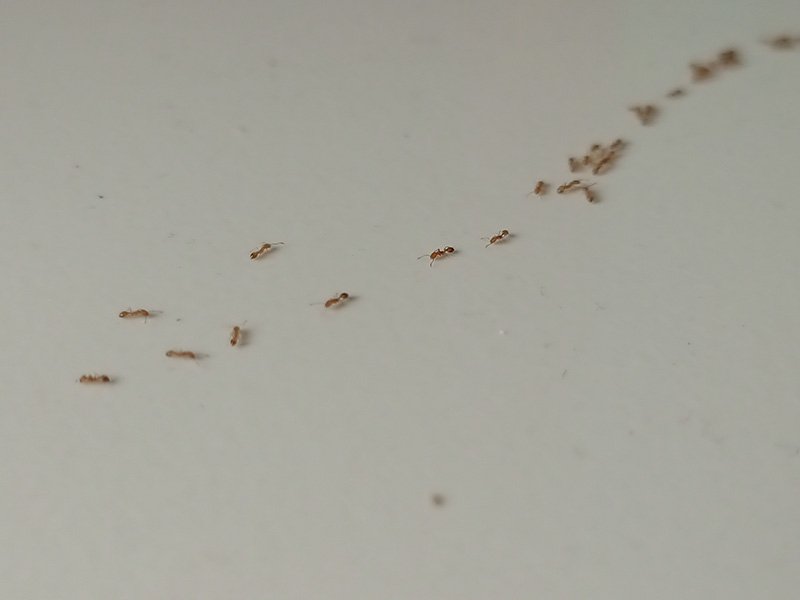
Odorous house ants: they’re usually smaller ants, and when crushed they can give off a strong odor that many people describe as “rotten coconut.”
Carpenter ants: they’re typically much larger than odorous house ants and may be associated with damp or water-damaged wood. If you find sawdust-like debris near trim, windows, or other wood, that’s worth taking seriously.
If you’re still unsure after reading the sections below, jump to the species pages above (they include more detailed identification cues).
Odorous House Ants at a Glance
Odorous house ants, also called sugar ants, are most often a nuisance and contamination problem—especially around kitchens, pantries, pet food areas, and trash.
Common homeowner observations include:
- Smaller ants that travel in steady trails
- Activity increases when food or moisture is available
- The odor clue when crushed
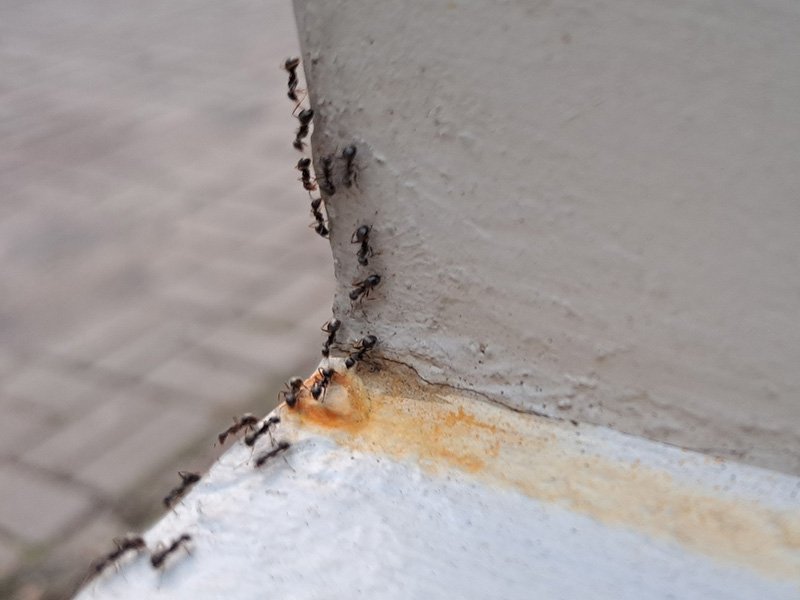
Carpenter Ants at a Glance
Carpenter ants are a property protection concern because they can tunnel into wood to create nesting areas. They don’t eat wood like termites, but they can still cause costly issues if a colony becomes established.
Common homeowner observations include:
- Larger ants (often noticeably larger than other ants you’ve seen indoors)
- Activity near windows, doors, garages, attics, or areas with moisture issues
- Possible debris near wood (especially if there’s a leak or rotting wood nearby)
What to Do Next (Without Making the Problem Worse)
A quick word of caution: spraying visible ants often makes ant problems feel better for a day or two, but it frequently doesn’t solve the source of the issue.
A better approach is:
- Clean up food residues and secure pantry items
- Reduce moisture where possible (especially around sinks, tubs, and leaks)
- Seal obvious gaps where trails are entering
- Use the right strategy for the right species (baiting and colony-focused control are often more effective than contact sprays)
If you want help confirming the species and getting long-term control, The Pied Piper can inspect, treat, and help prevent repeat invasions as part of our home pest control plans.
To see where we serve across Oklahoma and Texas, visit our service area page.
When to Call The Pied Piper
Consider scheduling professional help when:
- You’re seeing ants in multiple rooms or day after day
- DIY steps aren’t reducing activity
- You suspect carpenter ants because of size, moisture issues, or wood-related concerns
The Pied Piper provides trusted pest control solutions for homes and businesses throughout Eastern Oklahoma, Tulsa, and the Dallas–Fort Worth metro.
FAQs About Odorous House Ants & Carpenter Ants
Do Odorous House Ants Damage Wood Like Carpenter Ants?
Odorous house ants are generally considered nuisance ants. They can be frustrating (and contaminate food), but they aren’t known for wood damage the way carpenter ants are..
If I Have Carpenter Ants, Does That Automatically Mean I Have a Leak?
Not automatically—but carpenter ants are often associated with moisture problems (like a small leak, condensation, or damp/rotting wood). If you suspect carpenter ants, it’s a good idea to look for moisture sources while also having the infestation professionally assessed.
Why Do I See Ants One Day and Then Nothing for a Week?
Ant activity can spike when weather changes, when a food source becomes available, or when foragers find a new entry point. That “on and off” pattern doesn’t always mean the problem is gone—it can mean the colony is still present but shifting trails. If you’re seeing recurring activity indoors, our residential pest control services are designed to stop the source of the issue and help prevent repeat invasions.