What Kind of Scorpions Live in Oklahoma and Texas?
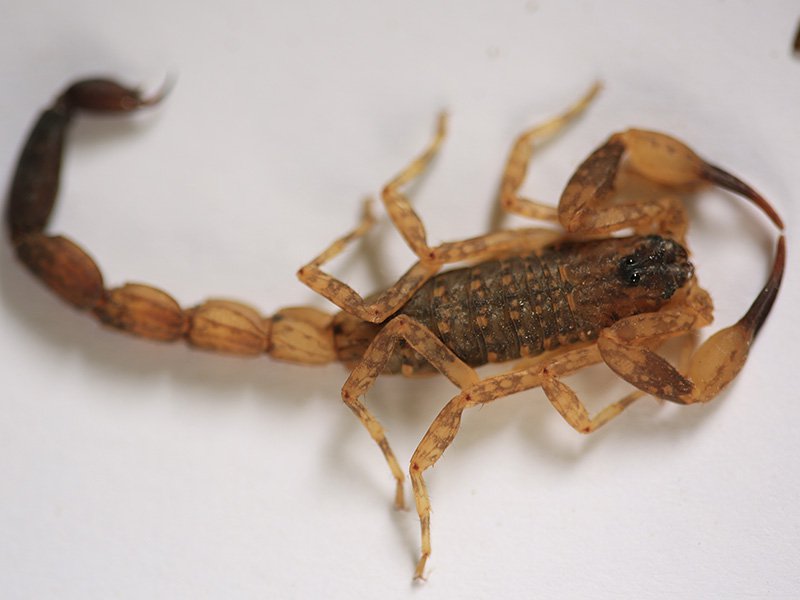
The scorpion you're most likely to find in your home is the striped bark scorpion. It's the most common species across both Oklahoma and Texas, and it's the one our technicians deal with on the majority of scorpion calls.
They're small — usually two to three inches long — and range from pale yellow to tan, which makes them easy to miss against light-colored walls, flooring, and concrete surfaces.
What makes bark scorpions especially unsettling is their ability to climb. While most scorpions stay close to the ground, bark scorpions can scale walls, crawl across ceilings, and work their way into elevated hiding spots like attic spaces, upper-story windows, and door frames. That's often why homeowners are so surprised by where they turn up.
In Oklahoma and North Texas, scorpion activity usually ramps up during late spring and summer as temperatures stay consistently warm. Dry outdoor conditions often push them toward cooler, more humid areas indoors.
Why Do Scorpions Come Inside?
Scorpions aren't trying to move in with you. They're following the conditions they need to survive: moisture, shelter, and food. And by food, we mean other insects.
If your home has crickets, roaches, or other small pests around the structure, scorpions may not be far behind. Many of the homes we treat for scorpions also have underlying insect activity nearby that attracts them in the first place.
In parts of eastern Oklahoma — especially around Eufaula, Muskogee, and areas near Lake Eufaula — moisture-rich soil and nearby water sources create ideal hiding spots around foundations, retaining walls, landscaping stone, and woodpiles. From there, scorpions work their way inside through cracks around pipes, gaps under doors, and utility openings. In homes around Tulsa and Broken Arrow, we regularly find garage door gaps acting as one of the biggest access points. Homeowners searching for pest control in Tulsa often discover scorpions are getting inside through the same structural vulnerabilities that allow other pests in.
Over in North Texas, homes in Azle and Fort Worth that back up to wooded areas or natural vegetation tend to experience the most scorpion activity. The rocky terrain and limestone-heavy soil give bark scorpions plenty of protected daytime hiding spots outdoors. Once temperatures climb, homes start becoming much more attractive. Cooler temperatures, moisture, and steady insect activity make indoor spaces ideal shelter. That's something we often see in neighborhoods that need pest control in Fort Worth, especially during the hottest parts of the year.
If you're seeing scorpions more than once indoors, it's usually a sign there's an ongoing issue around the home rather than a one-time sighting.
Where Scorpions Hide in Your Home
Scorpions are nocturnal, so most homeowners don't see them during the day. They stay tucked into tight, dark spaces and become active at night while hunting.
Some of the most common hiding spots our technicians find include:
- Shoes left near doors or in closets
- Garages with stacked boxes or storage bins
- Bathrooms near tubs, showers, and sinks
- Gaps around plumbing penetrations
- Wall voids and spaces behind baseboards
- Laundry rooms and utility areas with higher humidity
If you suddenly start finding scorpions in the same areas repeatedly, that's often a sign they're consistently using the same entry points nearby.
If you want to confirm whether scorpions are active around your home after dark, UV flashlights can make them easier to spot. Their exoskeletons glow bright blue-green under ultraviolet light, which helps our technicians identify activity during inspections.
Are Scorpion Stings Dangerous?
A sting from a striped bark scorpion is painful. Most people compare it to a bee sting. For healthy adults, pain and swelling usually improve within a few hours.
The bigger concern is for young children, older adults, and anyone with compromised health conditions. In those situations, symptoms can become more serious and may include numbness, muscle twitching, or difficulty breathing. If that happens, it's important to contact a doctor or seek medical attention.
Even when stings aren't medically serious, repeated sightings indoors usually mean scorpions are consistently finding ways inside.
How The Pied Piper Handles Scorpions
Scorpions are covered under our Piper Shield, Piper Pro, and Piper Elite home pest control plans.
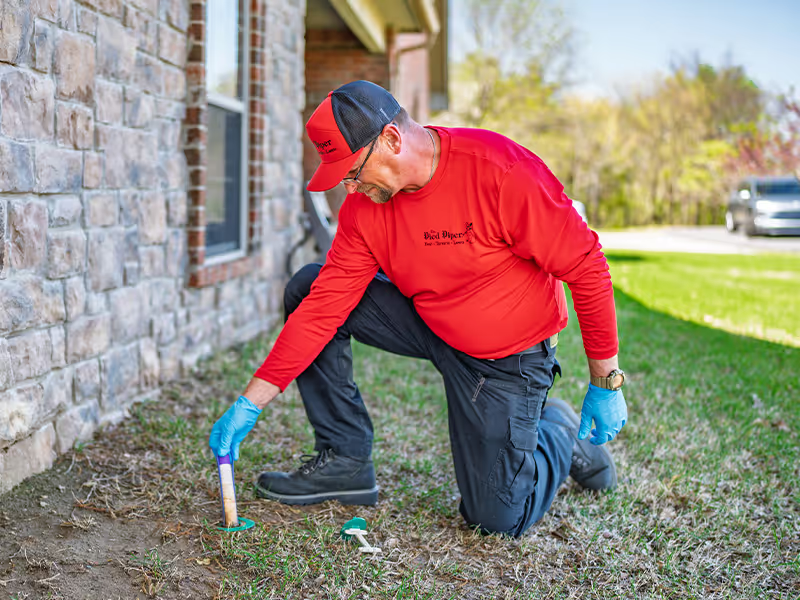
Every service starts with a detailed inspection. We look for exterior entry points, moisture conditions, landscaping issues, and the insect activity that's attracting scorpions to the property in the first place.
From there, we treat the exterior perimeter to create a protective barrier targeting both scorpions and the insects they feed on. Reducing the food source is a major part of long-term scorpion control. We also address accessible entry points and identify harborage areas around the home, including woodpiles against foundations, excess debris, heavy leaf litter, and other sheltered hiding spots.
Most homeowners are surprised to learn that the problem usually starts outside long before the first scorpion ever appears indoors.
Ongoing service also matters. Scorpions can continue moving in from neighboring properties, wooded areas, and rock-heavy landscapes surrounding the home. Regular treatments help maintain a strong protective barrier while allowing us to monitor for new activity before it becomes a larger issue.
That's the kind of long-term protection homeowners across Oklahoma and North Texas rely on us for every year.
Common Questions About Scorpions in Oklahoma and Texas
Can scorpions come up through drains?
It's unlikely. Scorpions typically don't travel through plumbing systems. When one falls into a sink or bathtub, it usually stays there and cannot climb back out. In most cases, they entered through nearby gaps, vents, or structural openings instead.
What time of year are scorpions most active in Oklahoma and Texas?
Scorpion activity is usually highest from late spring through early fall when temperatures stay warm overnight. During extreme summer heat, they're more likely to move indoors searching for cooler, more humid conditions.
Why am I seeing scorpions in my garage?
Garages are one of the most common places we find scorpions because they offer shelter, darkness, and easy access from outdoors. Gaps under garage doors, cluttered storage areas, and nearby insect activity can all contribute to garage sightings.
Do scorpions come back after treatment?
They can if conditions around the home still support them. That's why ongoing pest control is important. Effective scorpion control focuses on both the scorpions themselves and the insect activity, entry points, and outdoor harborage areas attracting them to the property.
How do scorpions get into upper floors of a home?
Because bark scorpions are strong climbers, they can scale exterior walls and enter through second-story windows, attic vents, rooflines, and small gaps around siding. Homes with brick or stone veneer often provide even more climbing traction.
Keep Your Home Scorpion-Free
Nobody wants to share their home with scorpions, and you shouldn't have to. The Pied Piper has been helping homeowners in Carlton Landing, Eufala, Weatherford, and Azle, as well as across eastern Oklahoma and the DFW Metroplex handle scorpion problems since 2010. Whether you've seen one scorpion or you're finding them regularly, we'll identify what's attracting them, locate how they're getting inside, and build a plan designed to keep them out long term.
Ready to get started? Contact us to schedule your inspection.