Why Do Ants Travel in a Line?
It often begins with a worker ant searching for something the colony can use. That might be crumbs under an appliance, pet food left in a bowl, residue near a trash can, or moisture around a sink.
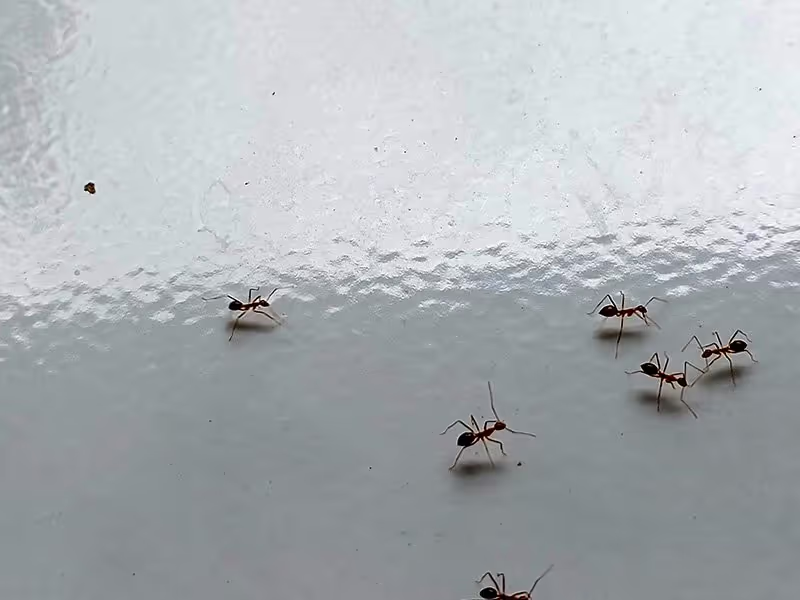
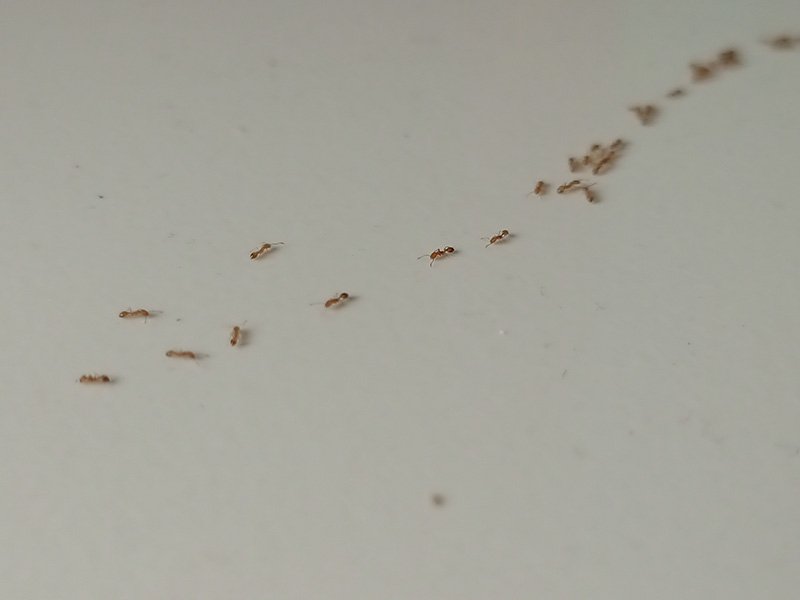
When the ant finds a dependable resource, it can leave a pheromone trail as it returns to the colony. Other workers detect that scent and follow the same route. Each trip reinforces the trail, which is why the line can become more noticeable over time.
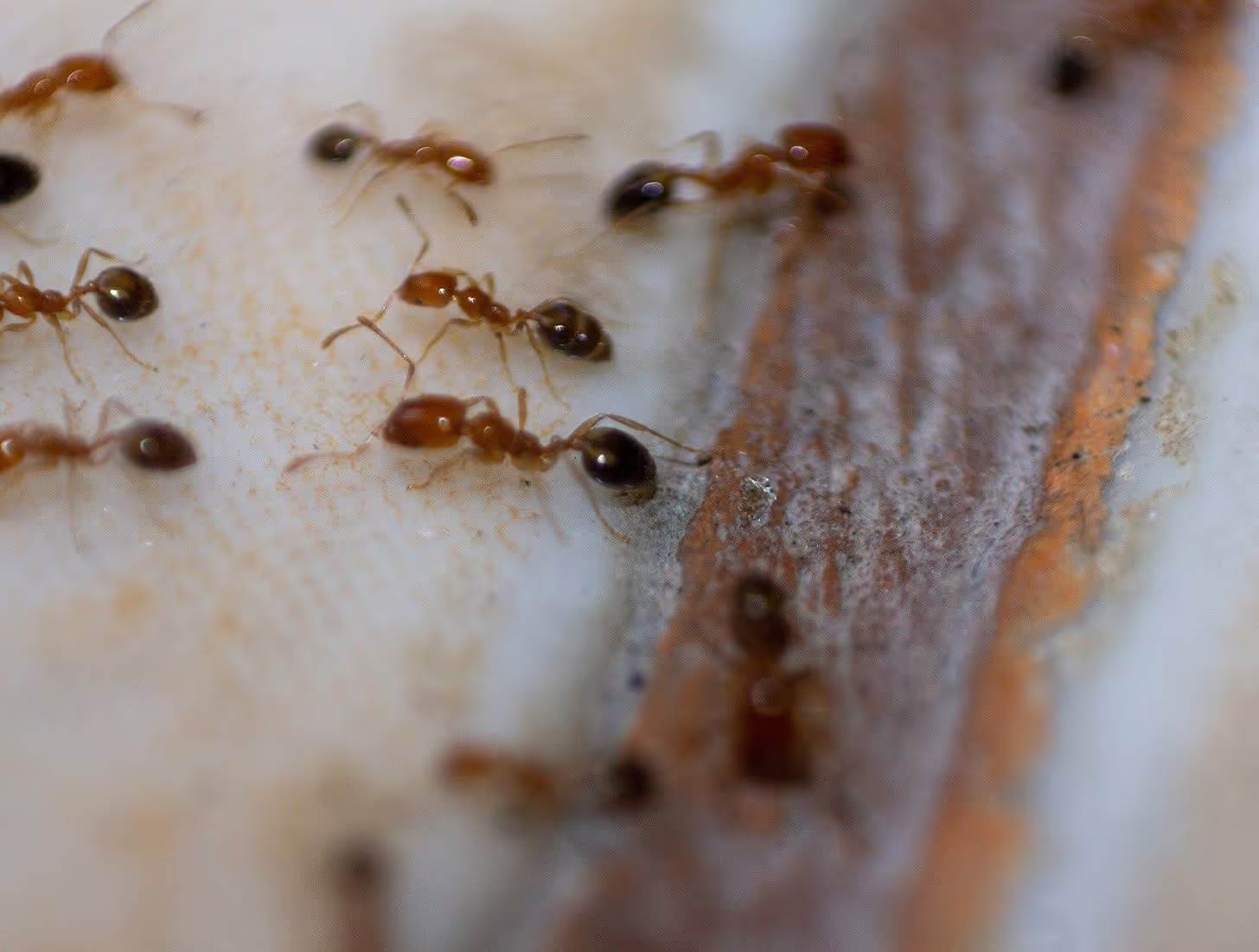
Texas A&M AgriLife recommends looking at ant trails as one of several clues when identifying household ants. The ants’ size, appearance, activity time, food preferences, and nesting habits also matter. Because many household ants look similar, the trail alone is rarely enough to identify the species.
What Can an Ant Trail Tell You?
An ant trail tells you that the ants have found something worth returning to. It can also offer a few clues about how they are using your home.
The Trail Leads to One Particular Spot
A steady line leading to the same place usually means the ants have found a dependable resource there.
In kitchens, that might be food residue along the side of a stove, crumbs beneath a cabinet, or something sweet stored in the pantry. In bathrooms and laundry rooms, moisture may be the bigger attraction.
Removing what attracted the ants may interrupt the trail, but it does not necessarily address the colony sending them inside.
The Ants Use the Same Entry Point
Following the trail in the opposite direction may show you where the ants are getting inside. They might disappear beneath a door, through a window gap, around plumbing, or into a small opening along a baseboard.
That entry point is useful information, but it may not lead directly to the nest. Most ants that enter Texas homes begin with colonies outdoors, although some species can establish nests inside walls and other protected parts of a structure.
The Trail Appears at the Same Time Each Day
Some ants are more active during certain parts of the day. Carpenter ants, for example, are often noticed foraging at night, while other household ants may be easier to spot during daylight hours.
If ants consistently appear in the evening, overnight, or at another predictable time, that timing may provide an additional identification clue. It is worth noting when and where you see them, especially when the ants are not present all day.
What Do Multiple Ant Trails Mean?
Seeing more than one ant trail does not automatically mean several colonies are inside your home.
Ants may be entering through multiple openings, traveling toward more than one food or moisture source, or using routes that disappear behind cabinets, walls, and flooring. One trail may be visible near a window while another appears along a baseboard in a different room.
Multiple trails can indicate that the activity is more widespread than one line of ants near the sink, but the trail pattern alone cannot confirm how many colonies are present or where the nest is located. The species, entry points, activity times, and conditions around the home all need to be considered.
What If the Ant Trail Suddenly Disappears?
A trail that disappears for a few days does not always mean the problem is gone.
The ants may have exhausted the food source, shifted to another route, or temporarily lost the scent after the surface was cleaned. Changes outside can also affect where ants forage and which paths they use.
The colony may still be nearby even when you no longer see a neat line across the counter. Workers can rediscover the same area or begin using another path later.
A trail that repeatedly returns to the same room is a stronger indication that ants have a dependable reason to keep coming back.
Why North Texas Homes See Ant Activity Indoors
Ants are among the most common household pests in Texas, and many of the species that enter homes begin with nests outside.
Homeowners in Azle, Weatherford, Springtown, and Arlington often notice trails in kitchens, bathrooms, garages, and other places where ants can find food or moisture. The properties in these communities may not look the same, but ants can take advantage of similar conditions around any home.
Small openings near doors, windows, plumbing, foundations, and utility lines can give ants a way inside. Landscaping that touches the house, moisture near the foundation, and accessible food indoors can also make it easier for a colony to establish a reliable route.
In other words, the trail across your counter may begin much farther away than it appears.
Why the Visible Ants Are Only Part of the Problem
It is natural to focus on the ants moving across the counter. They are part of the problem you can see.
However, those ants are workers. The colony producing them may be outside, beneath landscaping, near the foundation, under a slab, or in a protected area of the structure.
Wiping up or spraying the visible ants may interrupt that particular trail, but it does not tell you where the colony is or whether other workers are using a different route. When ants return after the counter has been cleaned or begin appearing somewhere else, the underlying source may still be active.
Correct identification matters, too. Ant species differ in their nesting habits and behavior, so the same approach does not work equally well for every ant problem.
Ongoing Ant Protection With Piper Pro
Recurring trails are often a sign that reacting to each new line of ants is not enough. The attraction may change, and the route may move, but the colony can continue sending workers toward the home.
With Piper Pro, you do not have to start over every time ants find a new route indoors. This residential pest control plan provides ongoing protection against ants and other common household pests, as well as rodent protection and seasonal mosquito service.
The Pied Piper has served North Texas since 2010. Our technicians regularly help homeowners in Azle, Weatherford, Springtown, Arlington, and surrounding communities identify the ants they are seeing and determine where the activity is coming from.
Frequently Asked Questions About Ant Trails
Can ants leave a trail across carpet?
Yes. Ants can follow scent trails across carpet, although the route may be harder to see than it is on a countertop or hard floor. You may notice ants traveling along the edge of the room, beside furniture, or near a doorway where the carpet provides a more protected path.
Why are ants trailing around my pet’s food bowl?
Pet food provides a dependable source of protein, fat, and carbohydrates. Even small pieces left around the bowl can attract foraging ants. Water bowls and damp feeding mats may also provide moisture.
Can ant trails lead to an electrical outlet?
They can. Ants may disappear around outlet covers, switch plates, plumbing openings, or other small gaps in a wall. That does not necessarily mean the colony is inside the outlet. The opening may simply provide access to a wall void or another hidden route through the structure.
Get Help With Ants in Your North Texas Home
Request a free quote from The Pied Piper or call (888) 737-8943 to learn more about Piper Pro and schedule service for your North Texas home.