Ants Don’t Show Up by Accident
Ants are always out searching. They send out scouts every day looking for food, water, and shelter. Most of the time, those scouts don’t find anything worth reporting back.
But when they do, everything changes quickly.
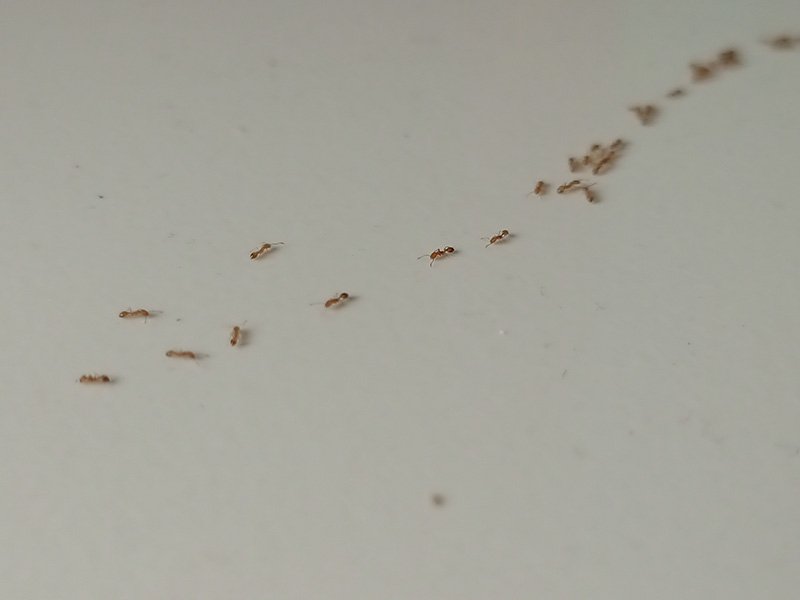
One ant finds a food source, leaves a scent trail, and within hours, you’ve got dozens or even hundreds following that same path. That’s why it feels like ants are suddenly showing up. In reality, the colony has been nearby the whole time. The sudden influx has just now put them on your radar.
Something Has Started Attracting Them
Food is the most common trigger, but it’s not always obvious. It doesn’t take a big mess. A few crumbs under an appliance, a sticky spot on the counter, or even a pet food bowl can be enough.
Water is just as important. Ants are drawn to moisture, especially during hotter months. A small leak under the sink, condensation around pipes, or damp areas in bathrooms can pull them inside.
In many homes, it’s a combination of both. A little moisture and a small food source are all it takes to turn your kitchen or pantry into a reliable stop for a colony.
Weather Plays a Bigger Role Than You Think
In Oklahoma and North Texas, shifts in weather can push ants indoors fast. Heavy rain can flood out nests in the soil, forcing colonies to relocate. When that happens, your home becomes a dry, stable option.
Hot, dry stretches can have the same effect. When the ground dries out, ants start searching for water sources. That often leads them straight inside.
Seasonal changes matter too. Spring and early summer are peak times for activity. Colonies are growing, and food demand increases. That’s when homeowners are most likely to notice sudden infestations.
They’ve Found a Way In—And It’s Easier Than You Think
Ants don’t need much space to get inside. Tiny gaps around windows, doors, and the foundation are more than enough. Utility lines, weep holes, and small cracks are all common entry points.
Once one ant gets through and finds something worth reporting, the rest will follow the exact same route. That’s when you start seeing consistent trails.
Most homeowners never notice these entry points until there’s a problem. By then, the colony has already mapped out a reliable path in and out of the structure.
The Colony Is Likely Close to Your Home
When ants show up indoors, the nest is usually nearby. It could be in the soil around your foundation, under mulch beds, beneath concrete, or even inside wall voids.
Some species, like carpenter ants, can nest inside the structure itself if conditions are right. Others, like odorous house ants, prefer to nest outside but travel indoors constantly for food.
That’s why the problem doesn’t go away on its own. You’re not dealing with a few stray ants—you’re dealing with an established colony that’s using your home as a resource.
Why Store-Bought Solutions Don’t Fix the Problem
It’s tempting to grab something off the shelf and try to knock the problem out quickly. The issue is that most over-the-counter products only deal with the ants you can see.
They may kill a portion of the workers, but they don’t eliminate the colony. In some cases, they actually make things worse by causing the colony to split and spread.
From our experience working with homes across this region, that’s one of the most common homeowner frustrations. The ants disappear for a few days, then come back in a different spot.
Until the source of the colony is addressed, the activity continues.
What It Really Takes to Get Rid of Ants
Effective ant control isn’t about chasing trails. It’s about understanding where the colony is, how the ants are getting in, and what’s attracting them in the first place.
That means identifying the species, locating nesting areas, treating the colony directly, sealing up entry points, and reducing the conditions that drew them inside.
This is exactly where having a residential pest control plan in place makes a difference. With a consistent approach, ants are handled before they become a visible problem, and conditions that attract them are managed over time.
When It’s Time to Bring in a Professional
If you’re seeing repeated trails, activity in multiple areas, or ants that keep coming back no matter what you try, it’s a sign the colony is well established.
That’s where a professional approach makes the difference.
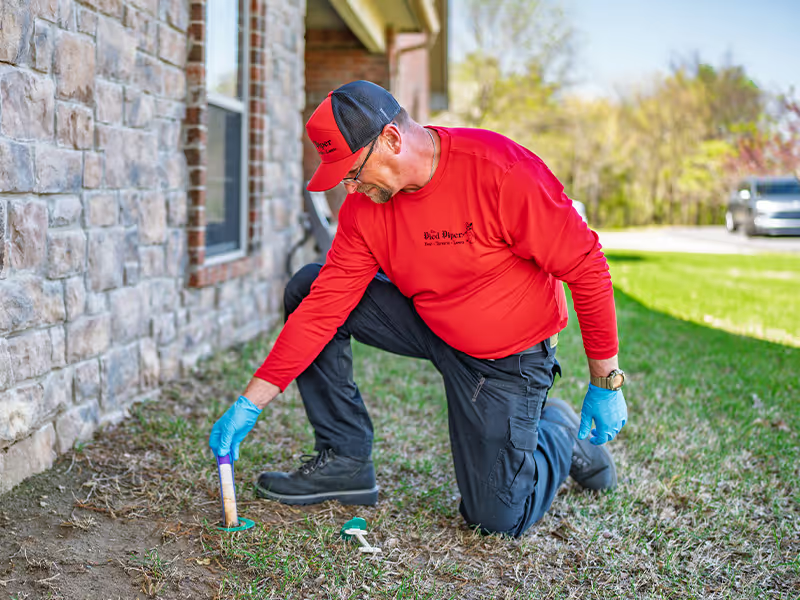
At The Pied Piper, we’ve helped homeowners across Oklahoma and Texas solve ant problems by going beyond surface treatments. Our team focuses on identifying the source, targeting the colony, and implementing a residential pest control plan that keeps your home protected year-round.
If ants have suddenly shown up in your home, there’s a reason. The sooner that reason is identified, the easier it is to take control of the problem.
FAQs About Ants in Your Home
Why are there ants in my kitchen but nowhere else?
Kitchens are one of the easiest places for ants to settle in because everything they need is right there. Food, water, and shelter are all within reach. Even small crumbs, grease spots, or moisture under the sink can attract them. If they’ve found a reliable source, they’ll keep returning to that same area.
Why do I keep seeing ants in my bathroom?
Leaky pipes, condensation, or damp areas around tubs and sinks can create the perfect environment for ants. In hotter or drier weather, ants will actively seek out these moisture sources indoors.
Why are ants coming out of my walls?
When ants appear to come out of the walls, it usually means they’re traveling through hidden spaces inside your home.
In many cases, the colony is located outside, and the ants are simply using wall voids as a pathway to reach food or water. But in some situations—especially with certain species like carpenter ants—the nest can actually be inside the wall itself, particularly if there’s moisture or damaged wood.
What you’re seeing is just where they’re coming out. The colony itself could be outside or already established indoors.
Why am I seeing ants upstairs?
Ants don’t stay on one level. Once they get inside, they’ll travel wherever they need to go to find food and water. Seeing ants upstairs usually means they’ve already established a path inside the home and are expanding their search.
Why do ants show up even when my house is clean?
Clean homes can still have ant problems. It doesn’t take much to attract them, and moisture plays a big role, too. In many cases, the issue isn’t cleanliness—it’s access. If ants can get inside and find even a small resource, they’ll take advantage of it.
Get Ahead of Ant Problems With The Right Plan
If ants have started showing up in your home, it’s a sign that something nearby is supporting them. The Pied Piper makes it easy to get ahead of the problem with a residential pest control plan tailored to your home.
You can find a Piper near you in communities like Eufaula and Carlton Landing in Oklahoma, as well as Dallas and Fort Worth in Texas.
Reach out today for a free quote and take the first step toward keeping ants and other pests where they belong—outside.