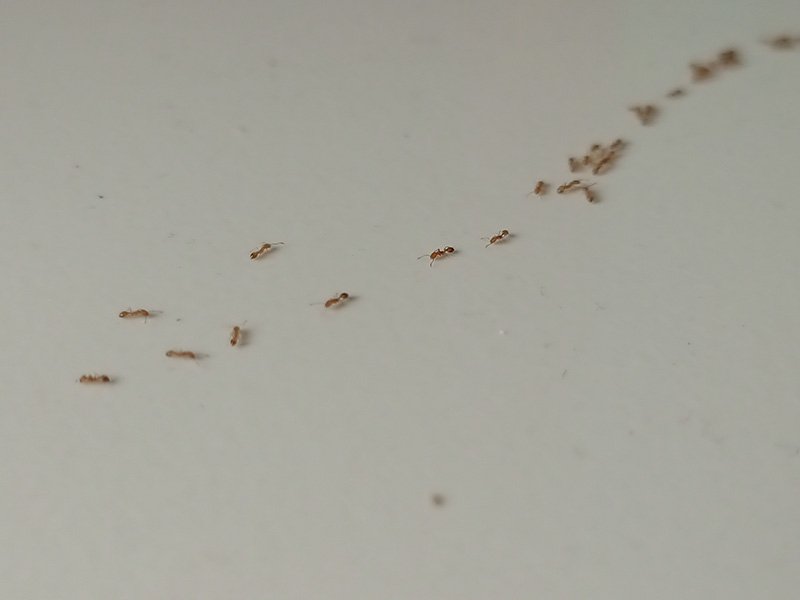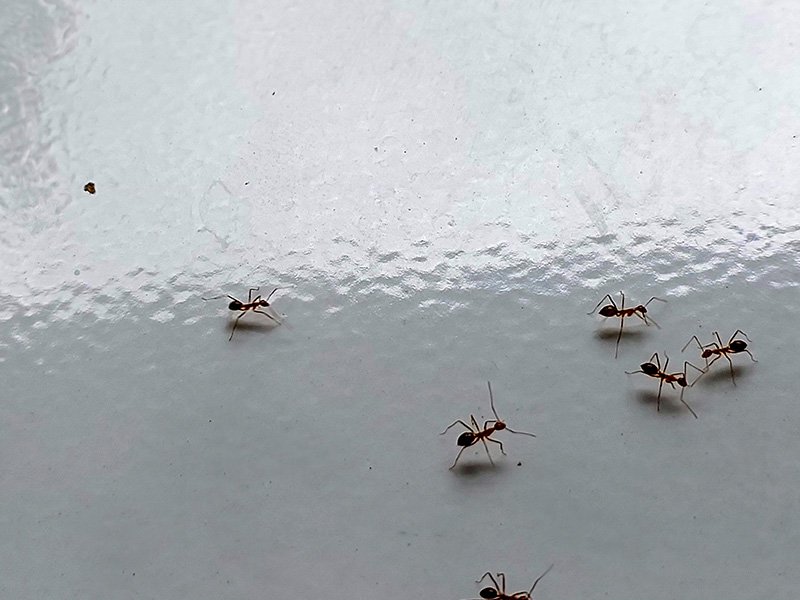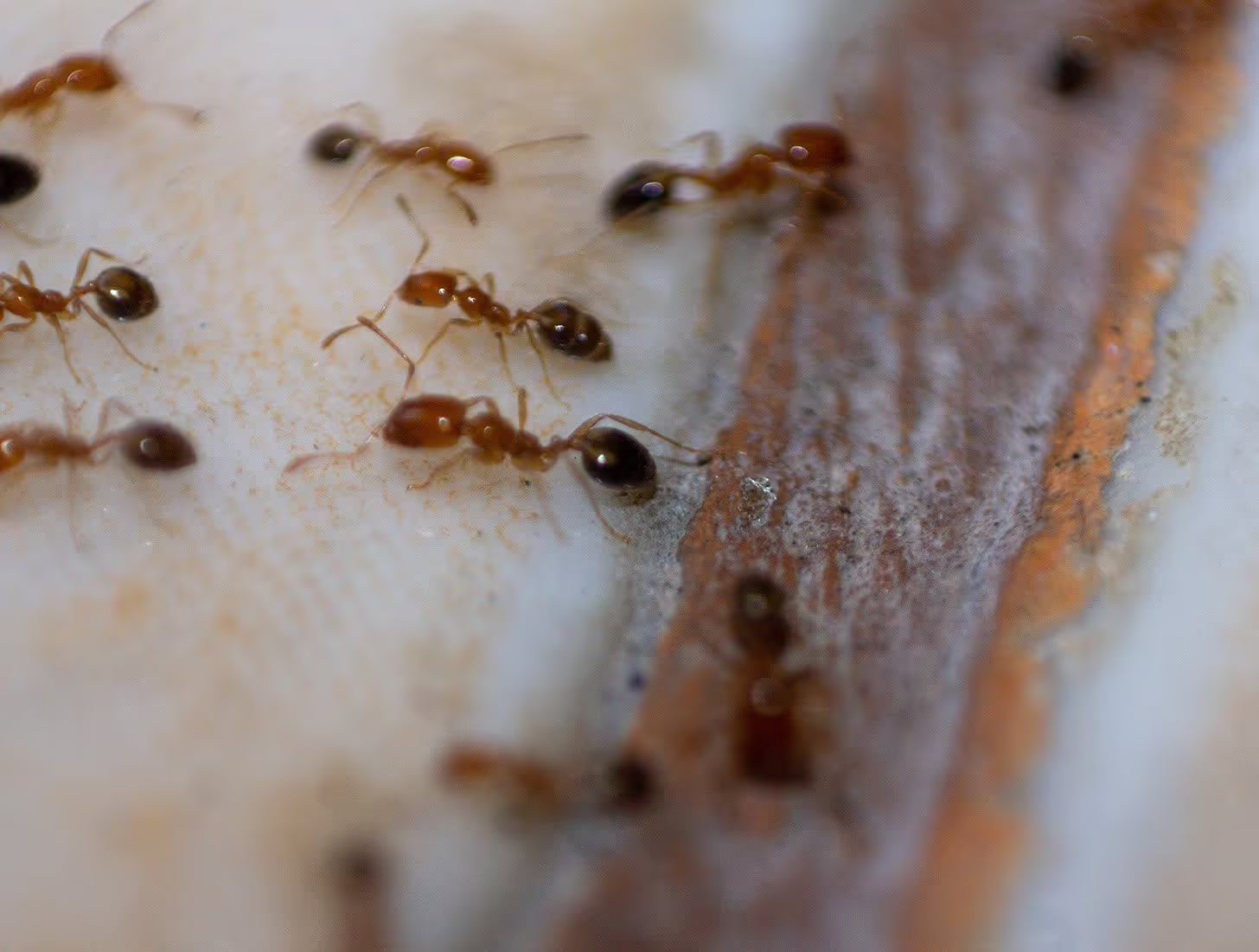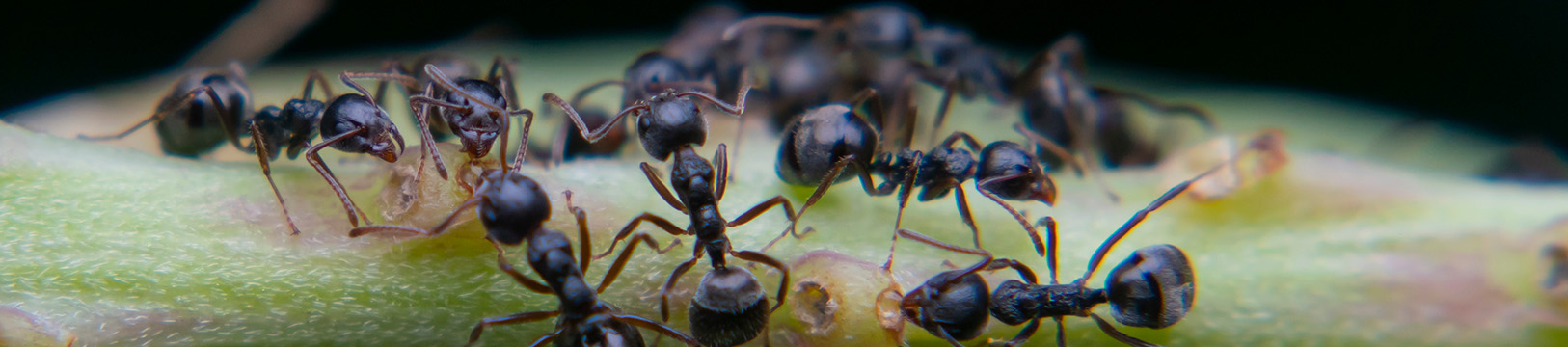

Little black ants (Monomorium minimum) are one of the most common household ants in Oklahoma and North Texas. The Pied Piper sees them regularly during home inspections — usually trailing along kitchen countertops, bathroom baseboards, or around pet food bowls. Despite their tiny size, these ants can show up in large numbers once they find a reliable food source indoors.
Little black ants are among the smallest ants you'll find indoors. Workers measure about 1/16 of an inch long — roughly the size of a pinhead. Their color is dark brown to jet black, and they have a shiny, smooth appearance.
Like all ants, they have:
What sets little black ants apart from other small household ants is their two-segmented waist (called a petiole) and a small stinger at the tip of the abdomen. The stinger is so tiny that most people never feel it, even if the ant tries to use it.
Their foraging trails tend to be slow and deliberate compared to some other ant species. If you're seeing a line of very small, dark ants moving at a steady pace along a countertop edge or baseboard, there's a good chance they're little black ants.
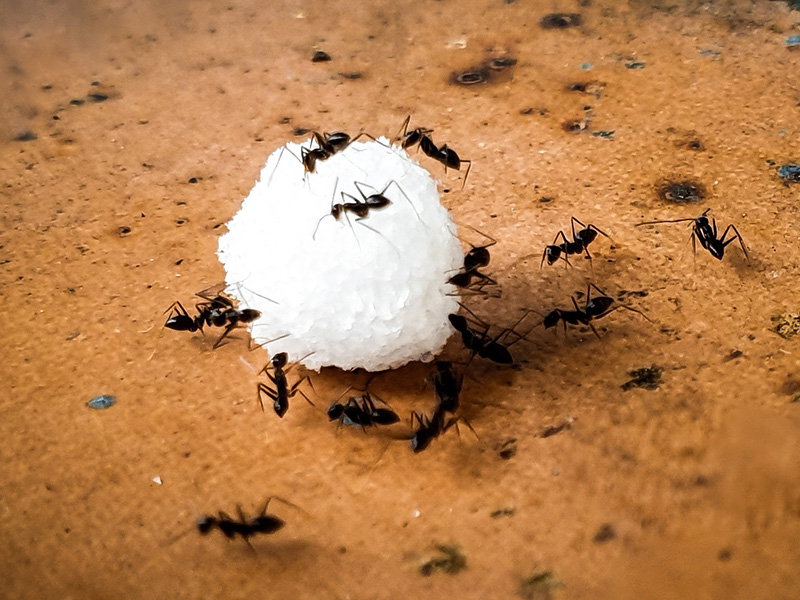
Little black ants are most active during warmer months, when colonies expand and foraging increases. Activity usually picks up in spring and stays high through the hottest parts of the year.
In climate-controlled buildings, little black ants may remain active indoors year-round. Our technicians sometimes find them trailing inside homes even during cooler months when outdoor activity has slowed down.
Little black ants are easy to overlook individually because of their size, but infestations tend to become noticeable once foraging trails are established. Signs to watch for include:
Little black ants follow scent trails between their nest and food sources. Even after cleaning visible ants, more will continue to appear as long as the colony and trail remain intact.
If you're seeing ants suddenly showing up in your kitchen or bathroom, it usually means a nest is nearby — either inside the structure or just outside the foundation.
Little black ants can nest in a lot of different places. They'll set up colonies outdoors, indoors, or both, depending on what's available.
Outside, little black ants commonly nest in protected areas such as:
You may notice small mounds of fine soil near cracks in pavement or along foundation edges where colonies have been excavated.
Once colonies establish around foundations, patios, or landscaping features, little black ants often continue cycling back into the home unless the nesting areas are properly addressed.
When they move indoors, little black ants typically nest in hidden spaces where they can stay close to reliable food and water sources:
Indoor nesting is more common in homes with moisture issues or in structures where small cracks and gaps provide easy access to wall voids.
Little black ants usually enter homes for the same basic reasons — food, moisture, and shelter.
Scouts look for anything they can bring back to the colony. Even a small grease splatter behind the stove or crumbs under the toaster can attract a trail of workers.
Kitchens and bathrooms are the most common spots we find them because of the combination of food and water. Leaky faucets, condensation around pipes, and damp areas under sinks can all draw them in.
Heavy rain can flood or disturb outdoor nests, forcing little black ants to move in search of drier shelter. In Oklahoma and North Texas, we commonly see indoor activity increase after heavy spring rains. Extreme heat can also push ants indoors in search of cooler, more stable conditions.
Little black ants have a broader diet than many other household ant species. They're not just after sweets — though they definitely like those too.
Outdoors, they feed on honeydew (a sugary substance produced by aphids), small insects, and other invertebrates. They'll also feed on insect eggs.
Inside homes, they're attracted to:
This varied appetite is part of what makes them a persistent nuisance. Whether it's the sugar bowl or a grease stain on the stovetop, little black ants will find it.
Little black ants are considered nuisance pests. They don't cause structural damage to homes and they're not known to transmit diseases.
They do have a small stinger, but it's so tiny that it rarely penetrates human skin. Even when it does, most people don't notice it.
The biggest issue for most homeowners is contamination around food and food prep areas. If ant trails cross countertops, pantry items, or stored food, anything they've come into contact with should be thrown out.
Because little black ants are so small, they can squeeze through openings most homeowners never notice. Common entry points include cracks in foundations, gaps around doors and windows, and openings around plumbing or utility lines.
Once a scout ant finds food indoors, it leaves behind a scent trail that guides other workers back to the same source. That's why little black ants often appear in consistent trails along counters, baseboards, and walls.
Several types of small, dark ants can show up in homes across Oklahoma and North Texas. If you're not sure which one you're dealing with, here are a few quick ways to tell them apart.
Odorous house ants are a similar size but give off a strong rotten coconut smell when crushed. Little black ants don't produce any noticeable odor. Odorous house ants are also slightly larger and range from brown to dark brown, while little black ants are jet black and noticeably smaller.
Acrobat ants have a heart-shaped abdomen that they raise over their body when disturbed — an easy visual tell. They're also slightly larger than little black ants and tend to nest specifically in damaged or damp wood.
Carpenter ants are much larger — usually about half an inch long — and are known for tunneling into wood to build nests. If the ants you're finding are very small and aren't causing any visible wood damage, carpenter ants aren't the likely culprit.
If you're still not sure which ant you're dealing with, our technicians can identify them during an inspection. For a broader look at the ants we commonly treat in this region, check out our guide to common ants in Oklahoma homes.
A few practical steps can help reduce the chances of little black ants establishing trails indoors.
Wipe down kitchen counters and stovetops regularly to remove grease and food residue. Store pantry items in sealed containers, especially sugary and oily products. Clean up pet food bowls after meals instead of leaving them out overnight.
Fix leaky faucets and pipes, and address any areas of standing water or condensation inside the home. Reducing moisture makes your home less attractive to ants that are seeking water.
Seal cracks and gaps around the exterior of your home, including around the foundation, windows, doors, and utility entry points. Trim vegetation and remove yard debris that sits close to the foundation.
Even with good habits, little black ants can still find their way in. Their size makes it almost impossible to block every potential entry point, which is why ongoing pest control makes a big difference.
Little black ants can be tough to eliminate on your own because their nests are often hidden in wall voids, under flooring, or deep in the soil along the foundation. Spraying the ants you see only removes the workers — the colony keeps producing more. That's why DIY ant control doesn't work long-term.
The Pied Piper's home pest control services are designed to handle exactly this kind of problem. Our technicians inspect the home and surrounding areas to find where ants are nesting, identify how they're getting inside, and apply targeted treatments that reach the colony — not just the visible trails.
Our ongoing Piper Pro and Piper Elite pest control plans also help prevent little black ants and other household pests from coming back. Regular treatments create a barrier that makes it difficult for ants to re-establish inside your home.
If you're dealing with little black ants in your kitchen, bathroom, or anywhere else in your home, The Pied Piper can help. Give us a call or contact us to get started!
Bathrooms provide the moisture that little black ants are attracted to. Condensation around pipes, dripping faucets, and damp areas around tubs and showers create conditions that draw ants in, even when there's no food source nearby.
"Sugar ants" is a common name people use for any small ant attracted to sweets, but it's not a specific species. Little black ants, odorous house ants, and several other species all get called sugar ants. If you're trying to figure out exactly what's in your home, size, color, and behavior are more reliable indicators than the sugar ant label.
Over-the-counter sprays typically kill the ants they contact but don't reach the nest. The colony continues to produce new workers, and since the scent trail often survives surface cleaning, replacement ants follow the same path right back. Effective control requires treating the colony itself.
Little black ants have a small stinger rather than strong mandibles for biting. The stinger is so small that most people never feel it. They're not aggressive toward humans and aren't considered a health risk from bites or stings.

Brad was excellent very professional and efficient! He went to the root of the problem and addressed it appropriately as needed. The service ladies you call for scheduling are also very polite and friendly . All around 10 on 10 ! Their products actually work too unlike others we’ve used in the past.
Lisa N.
Eufaula, OK

Great experience with Pied Piper! The technician Ben was very knowledgeable about all aspects of pest control. Very professional appearance and service to boot! Ben answered any questions I had and was very thorough with inspection and application. Would highly recommend. Ditch the rest and get with the best!
Kevin N.
Azle, TX

Always prompt to respond and very helpful when pest problems arise! They even came same day to set traps when I had a mouse and returned to remove the mouse after it was caught. Very pleased!
Hannah G.
Eufaula, OK


Helpful Tips & Info